August 15th, 2010

India Day Parade!

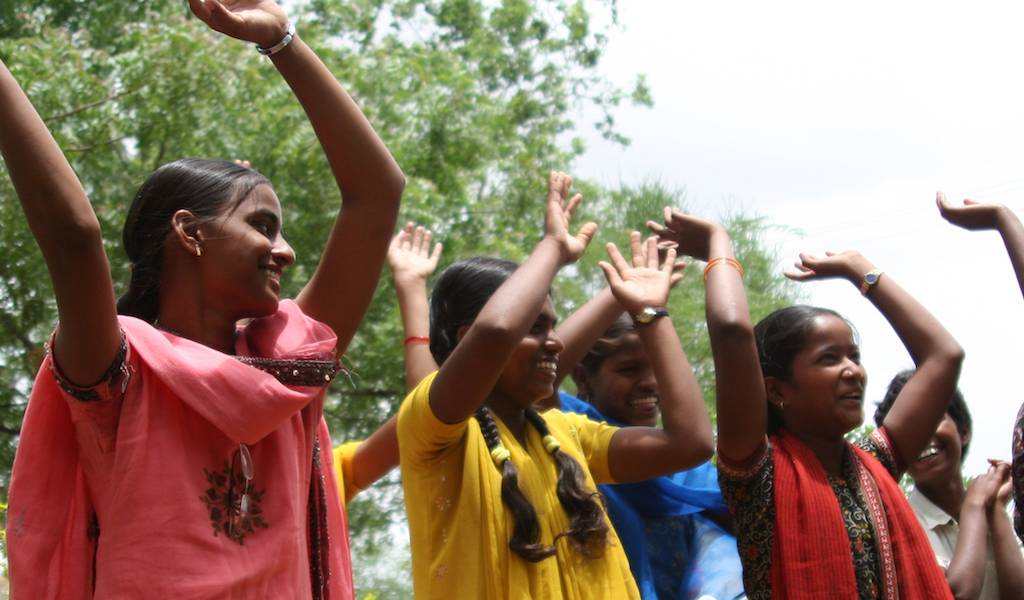
img_7846Women’s Education Project celebrated India Day on August 15, 2010 on a float in the Indian Day Parade. From bhangara dancing to samosa chaat - the day was eventful! An event organized by WEP Ambassadors.


August 9th, 2010

Using Traditional Craft Against Traditional Gender Roles

By Dana Laventure

The New York Times tells the story of Ms. Kakuben Lalabhai Parmar, from the rural village of Madhutra, in Gujarat, western India, where people are treated as untouchables. Women are bound to their homes, never allowed to “come out of [the] house and participate in society.”

Ms. Parmar might never have left her house in Madhutra, much less established the business she has today, if she had not begun selling her patchwork mirror embroideries when she was encouraged to do so by a nonprofit called the Sewa Project. “We never even thought of getting income from selling this stuff before,” she says in the Times. Instead, Ms. Parmar now earns an income, owns her own cattle, and holds her own account with a microfinance credit union. She recently toured New York City as an “informal ambassador” for Sewa and the Crafts Council of India, encountering for the first time a variety of novelties: everything from seatbelts and taxis to the Metropolitan Museum of Art.

In India, “by some estimates, 40 million to 60 million people gain at least part of their living making handicrafts.” The Crafts Council of India and Sewa Project strive to protect the tradition behind these crafts, like Ms. Parmar’s embroidery technique, while providing the resources for artisans to use their crafts to support themselves financially.

What a difference an education and a job can make in a woman’s life, allowing her to begin to change the gender roles that have confined her under the guise of tradition for so many years. Ms. Parmar’s success as a businesswoman shows “the importance of educating women, getting them out of the house and into jobs.” When she was younger, she says, “all the assets belonged to the father or the husband or the brother… In those days, the husband was in charge of everything.” Now, Ms. Parmar’s family life has changed: “Now that I have my own business and make my own money, my husband shows me respect.”

Dana Laventure is a recent graduate of the Gallatin School of Individualized Study at NYU, where she studied the role of communication and literature in social theory. She is currently a legal intern at the Open Society Institute, looking for future employment in nonprofit communications and considering a path into academia.

August 2nd, 2010

Scholarships Offered for Women of Developing Countries

By Kimberly Prosa

More and more organizations and higher education institutions are beginning to understand the value of education for women, and acknowledge that a woman’s contribution to her community is just as valuable as her contribution to her home and family.  In an effort to encourage the education of women in countries with deep-seeded cultural beliefs regarding education and gender roles, scholarship providers have encouraged women to pursue higher education opportunities by providing full-scholarships to attend both undergraduate and graduate colleges.  Most of these are higher education scholarships that encourage grantees to study abroad.  In more recent years, focused scholarships pertaining specifically to women from underserved populations have gradually become more recognizable and accessible through scholarship searches.  As wide and varied as the requirements and guidelines for these specified scholarships are, nearly all of them share the common goal of creating individuals, who through education, will become thoughtful problem-solvers and leaders that will be able to positively influence social, economic and political change within their communities.

While any scholarship designed to help a woman achieve an education is certainly a positive step in the right direction, many scholarships often have specific requirements and geographic restrictions that need to be examined and taken into consideration. For example, scholarships through the World Bank require that students reside in countries that participate in the World Bank community. Other scholarships limit the level of education a student can achieve such as allowing them to receive a bachelor’s degree, but not continue on to a Master’s degree, in order to provide scholarships for more students. Many scholarships are awarded to students for working toward specific majors. The most popular majors to receive scholarships are those in medical, agricultural and economical fields of study, as scholarship providers believe leaders in these fields will have the most impact on their communities. The countries that that offer the most scholarship aid to foreign students are: The United States, England, The Netherlands, Belgium, Sweden, Finland.  The United Nations University scholarship offered by Switzerland, is another ample provider.

A higher education for anyone, let alone a woman in many parts of the world, is an ideal goal and a proven formula for real change. Unfortunately, many women from developing countries are unable to achieve even basic levels of literacy.  For the girls who are marginalized into the wide gap of minimal or no education, receiving a life-changing scholarship for higher education can seem impossible. Fortunately, many in the non-profit sector realize the need to keep girls in school to receive their basic education, and numerous organizations have emerged to respond to the early educational needs of young women in order to get them to that next step, the step that gives them a future other than one pre-determined by circumstance.

The following are a few scholarship options offered for women of developing countries:

1.) The Margaret McNamara Memorial Fund www.mmmf-grants.org

2.) The AEI Scholarship Fund ( African Education Initiative) www.usaid.gov

3.) The P.E.O. International Peace Scholarship Fund www.peointernational.org

Kimberly Prosa holds a BFA in Dance from the Purchase Conservatory and is in the process of completing her Masters in Human Services with a focus in nonprofit management, with research pertaining to international women‘s issues.

July 6th, 2010

Vast Literacy Differences for Women of Urban and Rural India

By Kimberly Prosa

Imagine living in a country where among the factors determining the level of education you received ( if any) was the geographic region in which by circumstance, you lived. What if the difference between receiving a basic level of literacy was living in California or Michigan? For the many people of India, especially young women, this luck-of-the-draw location of birth is yet another obstacle in the path towards a basic education and in most situations, the only chance at altering a given reality and potentially creating a more promising future

[Caption: Nursing Students in Kerala] (Photo Credit: Spraguephoto.com)

Results from the U.S. census bureau (http://www.census.gov) in conjunction with results obtained from the census commissioner of India depict India as one of the countries with the lowest literacy rate for women throughout Asia. The current estimated overall female literacy rate is thought to be a little more than half (around 54%). Though this estimation on the whole is a fairly significant improvement over the last decade, a deeper look at the geographic break-down reveals a disheartening unequal balance of literacy rates between women of urban and rural India. The unequal distribution of educational opportunities is so imbalanced that literacy rates range from the highest in Kerala at 86%, to the lowest literacy rate found in Rajasthan with less than 12% of women who meet the qualifications to be deemed literate; this is an enormous discrepancy for a country 1/3 the size of the United States. While it is not necessarily uncommon for a developing country to experience differences between educational opportunities between urban and rural areas as issues of poverty can easily create educational barriers from region to region; India is unique in terms of the extreme ends of the spectrum in which women’s education is valued and dispersed. While the literacy rate as well as the rate of women completing middle school and even high school has risen statistically; these improvements are not spanning to reach the rural areas of India, and thus the gap between the regions continues to expand.

The 1398.5 miles that separate Kerala from Rajasthan would be the equivalent to a short plane ride in the United States from the west coast to the mid-west, but in India these miles create two different worlds for young women who already come into the world with gender based prejudices and obstacles in regards to their likelihood of receiving an education. In some instances the distance of these two worlds is even less with the second highest literacy rates occurring in Mizoram and the second lowest in Bihar, where these two states are separated by only 488 miles. The distinct differences that make up urban and rural educational discrepancies for women in addition to poverty are cultural differences, accessibility and opportunity. In addition, there is a correlation between high literacy rates, population decreases and health care.

The ability to meet the basic needs of the people of rural India in order to change the status of educating women from a privilege to a common cultural occurrence is essential. Providing educational opportunities that extend beyond the urbanized areas and ensuring educational programs and healthcare services reach the rural villages of India, is required to close the gap between the extreme differences in literacy rates and educational levels of rural and urban India.

Kimberly Prosa holds a BFA in Dance from the Purchase Conservatory and is in the process of completing her Masters in Human Services with a focus in nonprofit management, with research pertaining to international women‘s issues.

June 22nd, 2010

Real Beauty Is … supports WEP!

Real Beauty Is empowers women to feel good by letting go of limiting beliefs, tapping into their most powerful self, and defining beauty on their own terms. Our website and our events offer women a place to truly be themselves and to awaken into the fullest realization of their real beauty.

Real Beauty Is is supporting WEP at the next event! Thank you! Join us on June 23rd. Details are here:

www.realbeautyis.com/events

June 16th, 2010

Media: An Underlying Factor of Development

About the Author: Jeanny Vaidya is Nepalese citizen who is completing a Sociology Major at Davidson College, North Carolina. She is interested in the social development of youth, gender issues and urban poverty. Jeanny has also been a volunteer teacher in Nepal and Pakistan.Media: An Underlying Factor of Development

Media reinforces gender stereotypes which can be detrimental to the prospects of education for women and perpetuate violence against them. Recently, Deputy Secretary-General of the United Nations, Asha-Rose Migiro called to push to create gender neutrality in media by saying “such stereotyping, in turn, feeds into the gender discrimination which is a root cause of violence against women and girls.” In light of Migiro’s recent appeal it may be necessary to highlight the consequences and complexities of gender inequality in the media.

Media is a depiction of the true state of a society, whether it is in a developing or a developed nation. This mediated reflection of society reinforces certain stereotypes. Although women’s rights have improved in many nations, the media continues to portray women in a stereotypical manner. For example, mostly attractive women are cast for roles and they rarely play a main role in action movies. On the other hand, most developing nations are in transnational phases in terms of women’s economic and social value. Therefore, the media is both traditional and westernized (largely due to globalization) in its portrayal of women. For example, more women are shown having jobs than previously reported, but they continue to be shown to encompass a significantly inferior role in society than men. Nevertheless, developing nations have made some progress in disassociating the strict public vs. private dichotomy for males and females.

In the transitional phases of nations, media must incorporate culture and tradition in order to make their information relevant to the majority of the rural population. For example, various whitening creams in India such as Ponds White Beauty and Fair and Lovely have put out a great number of commercials. In these commercials, women who become “fairer” after using these creams are successfully able to find jobs as airhostesses or television reporters and are even asked for their hands in marriage. These types of commercials reveal the transitional nature of the society; while they affirm that women should go to work, ironically these are also jobs traditionally allotted to women. Commercials also depict more traditional values for women such as the attainment a partner through an arranged marriage. These commercials promote the idea that having light skin color is the key to success. If daughters are not fair skinned, parents may doubt the use of education for girls if they are shown commercials in which only girls with light skin succeed. The continuous portrayal of beauty and women in this manner calls into question whether media is in fact diminishing or augmenting opportunities for women.

Even if traditional values have still not changed in some societies, in some cases the westernization of media may keep more girls at home. Parents may feel the need to keep girls in a more protected environment because of the negative connotations associated with a westernized world which includes women who are free to drink and dress the way they want. If parents keep the girls at home because of the corruptive elements of a modern world depicted in the media, it may mean that they perceive protection and family honor to have a greater value than education Last year Sri Rama Sena, a pro-Hindu apolitical organization, beat up a group of girls who were drinking and dressing inappropriately in a pub in Manglore, South India. Such incidences question whether conservatives and even parents are actually protecting or controlling these women. Is the media helping women in rural areas with conservative backgrounds to empower themselves, or it is actually hindering their success and causing violence against them?
To read more about Deputy Secretary-General of the United Nations, Asha-Rose Migiro on gender neutrality in the media -
http://www.awid.org/eng/Women-s-Rights-in-the-News/Women-s-Rights-in-the-News/Media-must-play-role-in-pushing-for-gender-equality-Migiro-says
To read more about the Sri Ram Sena attack - http://www.hindujagruti.org/news/6204.htmlPond’s White Beauty - India


This is part 2 from a series of 5 commercials created about a woman who loses her boyfriend because she is dark-skinned. She wins his heart again after using Pond’s White Beauty cream. This commercial stars three famous Bollywood celebrities.

http://www.youtube.com/watch?v=hae9kk0gBSE&feature=related

Fair & Lovely Commercial - Pakistan
http://www.youtube.com/watch?v=2a1iXt1yPsk

June 11th, 2010

Microfinance as a Road to Women’s Empowerment

By Dana Laventure

Dana Laventure is a recent graduate of the Gallatin School of Individualized Study at NYU, where she studied the role of communication and literature in social theory. She is currently a legal intern at the Open Society Institute, looking for future employment in nonprofit communications and considering a path into academia.

Microfinance has been used to financially empower women in dire economic situations, in hopes that financial success will lead to social equality in cultures which do not have a tradition of women’s rights. WomensTrust.Org provides a history of microfinance here: http://www.womenstrust.org/content/history-microlending.

Muhammad Yunus, often credited as the founder of micro-credit, founded the Grameen Bank in Bangladesh in 1976. Today, 97% of Grameen Bank’s members are female. As explained by Christine Lagarde, [Yunus loaned to women] because “he knew that women would use their loans to advance projects or purchase tools, while he was wary of what men might do with the money.”

Any economic solution to gender inequality is only a small piece of the struggle. As Amartya Sen points out in his 1999 book Development As Freedom, money is not an end in itself, but a means toward freedom. Microloans can be used to make women equal competitors in the economic sphere, which can in turn develop their ability to act freely in their society.

In an article by Nicholas D. Kristof and Sheryl WuDunn that followed the release of their book, Half the Sky, Kristof and WuDunn tell the story of Saima, a Pakistani woman whose husband took out his economic frustration on her in daily beatings. Saima had borne two daughters, and her mother-in-law told Saima’s husband that he must take a second wife to have a son. At this point, Saima took out a loan of $65 to purchase beads and cloth, which she embroidered and sold to merchants. First, she used the profits to buy more materials. Then the profits were enough for Saima begin to pay off her husband’s debt. In time, she was using her revenue to employ 30 families to help her meet the demand from merchants. But most notable is the change in Saima’s husband’s attitude toward women, following her economic success. “Girls are just as good as boys,” he says at the end of Kristof and WuDunn’s story.

According to her Kiva lender profile, two of Medelyn Macabandi’s children have put their educations on hold because their family cannot currently afford to send them to school.
[

Encouraging microlending to women promotes the belief that every woman deserves to be an equal participant in her society. Participation may begin with the freedom to expand one's business, but it does not end there. On Kiva.org, most loans explain how the recipient will use additional revenue generated by their loan, often to build or their homes, or to pay for their children'seducation.

Sen also credits the Self Employed Women's Association (SEWA) with "bringing about a changed climate of thought, not just more employment for women, in one part of India." SEWA is a trade union organization of self-employed women workers in India, which provides not only microfinance but aims for each of its members to achieve full employment and self-reliance.

U.S. Secretary of State Hillary Clinton meets with women from SEWA in Mumbai, India, on July 18, 2009. (From SEWA's Archives]

As Kristof has pointed out, the percentage of microloans that go to women may feel “threatening” to men. There are also microloans which appear to go to women, but in fact get transferred to men: “studies of women borrowers have found evidence in varying degrees that control of the loan often transfers to her husband or other male relative… Women have been seen redirecting loans to men right in front of their bank officers.”

The Relative Success and Near-Misses of Microfinance
Another post on Kristof’s blog asks the questions, “Does the aid world exaggerate the benefits of microloans? How much do they help?” Kristof posts an answer from three economics professors. The professors’ analysis of evaluations of MFIs suggest that microcredit does not deliver measurable results in “health, education, or women’s empowerment” within 18 months from the date of the loan, but the professors also note that these larger goals are perhaps too much to expect in the short-term.

Microfinance alone is also not always enough to help businesses approach self-sufficiency. The “missing middle” refers to a new class of microentrepreneurs “whose businesses have outgrown traditional microfinance support, but who are unable to access more conventional bank financing.” According to this press release from the Asian Development Bank (ADB), ADB and the country of Japan are contributing funds to women of the “missing middle” in India. The money will go to train women in “financial literacy, business management and other skills,” while also assisting microfinance institutions in India to “review and revise their gender policies and practices” and “remove some of the current constraints faced by women entrepreneurs in accessing financial services.”

Misunderstandings Behind the Scenes
The microlending industry is also fraught with misunderstandings about its inner workings, which have generated controversy in the media. Last November, researcher David Roodman explained in a blog post that the money contributed on Kiva by online lenders does not go directly into the hands of borrowers. In fact, each loan request has already been funded by another institution, one of Kiva’s partner microfinance institutions (MFIs), before the loan is posted to Kiva.

Matt Flannery, the CEO and co-founder of Kiva replied, explaining that pre-disbursal, or the practice of funding loans before they are posted to Kiva, is necessary so that loan recipients do not have to wait once they have been approved, and clarifies that Kiva does not charge interest to its partner MFIs. The New York Times also picked up the story, and this article also drew another response from Kiva’s CEO.

In mid-April, another Times article suggested that in some cases, microfinance institutions actually profit from the interest collected from borrowers. Kiva again responded, this time with a blog post that clarified that while some of its MFI partners charge interest, Kiva vets it Field Partners thoroughly. Kiva also pays for 70% of its operations through optional “tips” from users, and 30% through “foundations and other sources.”

June 5th, 2010

Educated Women of India Face Domestic Violence

Educated Women of India Face Cultural Limitations at Home in the Form of Domestic Violence

By Kimberly Prosa

Kimberly Prosa holds a BFA in Dance from the Purchase Conservatory and is in the process of completing her Masters in Human Services with a focus in nonprofit management, with research pertaining to international women‘s issues.

For women in many parts of the world, receiving a formal education entails traveling down a path marked by trials and tribulations.  Achieving such a goal should leave these women with a sense of pride, accomplishment and above all, hope that the possibility and power to control their future and their children’s future is now within reach.  Because of this, human rights and women’s rights activists advocate to not only promote and provide educational opportunities for women world wide, but to change the culture of how women are valued and the opportunities and roles they are able to fulfill within their particular community and society at large.

We often think the ultimate goal of our efforts in women’s education is to give women from developing countries a sense of empowerment and opportunities to direct that empowerment towards positive social, economic and eventual cultural change. The concept that education is the key to creating lasting societal changes and solidifying concepts of justice, humanity and equality is a given, but what happens when educated, empowered women are unleashed into a culture that is not ready to accept this new identity? Specifically, how are the dynamics of a traditional marital relationship affected by women’s progress?

An article released by Swapna Majumdar of Womens E-news, provides insight into issues that Indian women in particular face regarding this shift in traditional marital roles as a result of educational equalization. The article focuses on incidents of domestic violence as documented by the Washington based International Center for Research on Women in collaboration with independent Indian researchers. While reports of domestic violence are not a new occurrence in both developing and developed countries, what links the incidents of domestic violence in these particular instances is the fact that these reports share the commonality of educated women facing violence at the hands of their husbands due to their new found empowerment and inability to fit the traditional role of the obedient wife. The most alarming revelation depicted in the article, are the results of a study determining a correlation between an increase in domestic violence and an increase in a woman’s education level along with the revelation that 45% of Indian women are abused by their husbands and nearly 75% of women who reported abuse have attempted suicide.

Allowing progress and equality to have a place in a culture ruled by deep-seeded tradition is perhaps the most difficult and slow going challenge to progression.  However, this information should in no way deter the movement toward equality through the education of women. If anything, these findings should serve to affirm the need for education and the empowerment of women as well as highlight the importance of expanding the message to being more than just something that is meant to be internalized by the women that it directly affects.  In short, this should be a message that is internalized on a societal level. Women will only be able to redefine their roles in society if the expectations and definition of what it means to be a husband and man are re-defined and imparted upon young men. For education to truly change and benefit a society, it must come in many forms and be allowed to integrate its’ concepts into culturally and religiously dominated societies.

Click here to read Swapna Majumdar’s article, http://www.womensenews.org/story/domestic-violence/031106/india-domestic-violence-rises-education

June 1st, 2010

Literacy and Media Access

Literacy and Media Access

The discrepancy in education between urban and rural areas of India has always difficult to overcome. While some camps opt for strict formal education, others promote alternatives such as media access in rural areas. Recently there have been a few, but innovative approaches to tackle illiteracy as well as education in general. Needless to say, program facilitators have researched and implemented methods according to the needs of specific rural populations.

NGOs in India have worked to battle illiteracy through creative means such as “Same-Language Subtitles” (SLS). This basic methodology used to improve reading skills has been largely promoted by the nonprofit organization PlanetRead. Subtitles come in various languages of India and they also change color in conjunction with what is being said on the screen. The method was first tested in 2002 at the Indian Institute of Management in Ahmedabad. Thus the large success of SLS especially with Bollywood songs has shown to increase the knowledge in the number of syllables with the rural population. Further studies continue to reveal that that the use of SLS has improved literacy rates.

Research also finds that more generally, cable television promotes the autonomy of women. In the section concerning India in SuperFreakonimics, authors Steven D. Levitt and Stephen J. Dubner argue that cable television and women’s education go hand in hand. Their study finds a positive correlation between exposure to cable television and the liberation of women. The book posits that cable television has done more for women than many other government laws by lowering birthrates and encouraging more girls to attend school. Alongside, it is important to consider that a part of this may be also due to the government and NGO sponsored television programs portraying the plight of women and ways in which to overcome gender biases.

Both SLS and cable television are constructive approaches towards women’s rights and education. Nevertheless, the westernization of Bollywood and other Indian media may present a potential future concern. While there continues to be an influx of programs relevant to the rural Indian population, the increase of western or more westernized programs on cable television may prove increasing difficult for rural women to relate to. Furthermore, the increase in the use of English in Bollywood movies and songs could question the legitimacy of using Bollywood as the sole source in literacy programs. In the near future, the English language and the Westernization of media may actually pose a barrier for rural women to obtain the type education that suits their needs.

More recently Deccan Development Society, an NGO based in Hydrabad India, decided to offer women in the village of Zaheerabad region video production workshops. While DDS recognizes the importance of formal education for decision making for women and overcoming gender bias, the organization decided to take a slightly different approach. DDS illuminated that much of what the rural population has to offer, such as their rich knowledge of forestry, farming, etc. can be translated into community media. Media Activisit, DeeDee Halleck who was part of the program says:

“We felt literacy can actually become a constraint for non-literate people whose aural and visual narratives are so powerful. So what else can one think of ? For me the possibility of providing video and audio technologies as a means of expression for the disadvantaged rural women was an exciting idea.”

Ten women attended workshops and had different reasons for why they wanted to learn video production. Some women said they wanted to be able to communicate their lives in a documentary form, while others desired to record government programs that took place in villages so that they would be able to look back at the information that had been taught. As an alternative to literacy, video production becomes a useful means to express the lived realities of these women.
Some of these methods of education also seem to have their pitfalls. For example, in order to be fully knowledgeable of video production, literacy, to some extent may be required. Other times, one may question to what degree can SLS eliminate illiteracy and actually prove useful to educate women about their rights.

SLS, cable televisions and video production have however all proved useful in terms of educational value. The correct method to promote education largely depends upon the interests and the age group of the women programs are dealing with. While younger women may prefer to improve their reading and language skills, older women may favor video production so that they may play a more prominent role in their community.

About the Author: Jeanny Vaidya is Nepalese citizen who is completing a Sociology Major at Davidson College, North Carolina. She is interested in the social development of youth, gender issues and urban poverty. Jeanny has also been a volunteer teacher in Nepal and Pakistan.

May 26th, 2010

Educating Women through Agricultural Development

Educating Women through Agricultural Development

By Samantha Watson

Across the globe, education of women is being examined. It is in fact, a major priority within the Millennium Development Goals. The question is, where schools systems fail young women, what other means of empowerment and what other instruments of education can help achieve gender equality, promote wealth, and ail some of society’s biggest failures? Maria Jose Novoa (MJ) of NCBA-CLUSA International (CLUSA) sat down with Samantha Watson (SW), WEP blogger and Assistant Program Manager at CLUSA, to discuss the innovate education model being implemented in CLUSA’s Agricultural Development Programs in Mozambique and its gender affects.

Maria Jose Novoa is a Senior CLUSA Associate. Mrs. Novoa has over 30 years of professional experience working in Africa with rural communities and local institutions in the areas of adult education and rural development, training of trainers, producer organization, gender and advocacy.

SW: Maria Jose, tell me a bit about CLUSAand about the current situation in Mozambique.

MJ: CLUSA works globally to develop cooperative businesses, pre-cooperatives, and civil society groups that function under the cooperative principles in developing countries. In Mozambique, our programming is largely agricultural development and agricultural extension services. We have been in Mozambique since 1995.

Mozambique faced a poorly developed economy and an illiteracy rate of 99% in 1975 when it declared independence from the Portuguese. Two years after independence, the civil war started and lasted until 1992. We are talking about just18 years of peace and development. Today around 47% of the population is literate, but if you look at the gender affects, men have a literacy rate of around 63%, while only 32% of women are literate. The need for development is great, and the gender imbalance is clear.

SW: Has the CLUSA approach to agricultural development always included gender empowerment and education components.

MJ: We started doing literacy work with our farmers in 1997. Our methodology has not been to target women for education, but rather to undertake an educational methodology that is accessible to all and includes women. We function largely through combined elements of three well-established learning approaches:

Reflect Methodology

Paulo Freire Methodology

Pedagogy of Text Methodology

The unique combination of these three approaches, make up the CLUSA Approach to literacy and education. A primary component of our approach is education in native languages.

In Mozambique there are several local languages, but Portuguese is the national language. Our farmers are literate in neither, and the women in particular have less familiarity with Portuguese. While the farmers are eager to jump into learning Portuguese, we find that it is more productive to begin literacy in their native language, and then transition to literacy in the national language, which is necessary for market participation.

This education component is essential to the empowerment of women. Women are often left to the side by agricultural development programs. They take up new technologies at a slower rate, they don’t have the confidence to engage in marketing, they are totally disempowered. Because women are more often kept out of the market, and thus often out of the national language, they benefit greatly from a curriculum that allows them to start in their native language and excel into the national language. Without basic literacy, without fluency in native and national languages, women are excluded from the market. So while the educational component supports our overall goals of agricultural development-it allows for better business, increased marketing, increased learning in a changing market-it most benefits and is most essential to the women farmers, and in some cases it is the only way by which women can go from subsistence farming to commercial farming. Through economic empowerment, gender roles begin to change.

SW: Literacy in and of itself changes gender roles? That seems a bit of an easy solution, can you explain the model/theory further?

MJ: No, literacy is not enough. It is a component. The farmers engage in 3 years of education programming with us, and as such achieve the equivalent of 5 years of formal education, or a primary education. But the learning process and the CLUSA methodology works on changing the ideas of both men and women, as to what the family roles and potential of women are and could be.

Traditionally in Mozambique the men have controlled the assets, money, land and other large economic inputs. However our participatory approach creates a more equitable dynamic in which men and women are expected to lead discussions, to develop ideas and to think critically. These interactions empower, or give self-esteem to the women. However they also provide a forum in which men can see the potential of their female counterparts in action. In these setting, Mozambican men begin to have female colleagues. There is no measuring how this affects their interactions with other women in their lives, but it is a clear impetus for changes in gender roles.

SW: Do you have any quantitative results that prove the effects of this programming? What are the different affects seen in men and women?

MJ: During the last 15 years, over 50,000 farmers, roughly 60% women, have become literate as a result of CLUSA literacy services. In a study, we found that in comparing farmers that participated in literacy programming and those not, the size of their plots almost doubled, regardless of gender. However, we also found that the gap in land size was less between men and women for those who had undergone the literacy training than those who had not.

Regarding women we can say the major impact is on their higher protagonism in the community organizations, as farmers associations or local entities, higher respect from their husbands and families, the level of proficiency and use of improved techniques, systems, matters and information, the access to money and knowledge as tools and means to manage their lives and access better conditions of life.

SW: What further gender programming do you feel should or can be included in agricultural development programs? Does CLUSA have plans to take any of these projects on?

MJ: In my opinion, it would be necessary to maintain the inclusive methodology and include some positive discrimination, helping women to resolve some of the serious dilemmas which determine a more visible and meaningful change in their lives. For example resolving the problems of poor access to water, transportation and cooking fuel would liberate a great portion of women’s time.

It is critical to deepen and develop an equal position for women on several levels:

Group Level:

  • Promoting and reinforcing self-esteem of women and a positive image of women in society;
  • Promoting the capacity of women to develop, enabling them to participate equitably in all social activities and at all levels of decision making;
  • Promoting equal access to and better control of, resources and benefits from economic activity, reproductive choices and community affairs through positive affirmation of women.

Organization Level:

  • Promoting and strengthening the capacity of women’s organizations to act on behalf of the development of women’s empowerment and gender equality;
  • Promoting and strengthening the capacity of development organizations and organizations of social movements to act in favor of the development of women’s power;
  • Working in order to achieve equality of working conditions, safe and respectable for women and men in their workplace.

Institutional Level:

Promoting changes in socio-economic conditions in society that often subordinate women to men, such as laws, educational systems, political participation, violence against women and human rights of women.

Finally, it is important to say that working with women requires more time and persistence given the disadvantaged place they are starting from, relative to men, in the fields of knowledge and know-how and have regarding the technical and scientific knowledge in general and in specific areas, not to mention access to resources and means of generating income and welfare.

SW: In your time working with women farmers and their education, what are the major take-aways that have been impressed on you?

MJ: Functional Literacy is basic to creating positive change in practices and attitudes among people. For instance, recently as part of a Cotton Value Chain Development Project funded the Gates Foundation, we conducted studied the effects of our literacy programming. Positive change has been observed in practices associated with: cultivation and yields, seasonal planning, management, financial management, handling money, weights and measurements, basic health practices, and improved academic performance of their children. Another relevant finding was that when multiple efforts are focused on the same challenge or issue, the results are magnified

SW: Any final words?

MJ: In areas where isolation, illiteracy and poverty are predominant, Functional Literacy is a key component of any coordinated effort to bring about long lasting and dynamic change. You can’t seriously discuss development while excluding education.

Literacy and numeracy in our opinion is a critical component for consistent growth and development and to the effective participation of the community in decisions affecting the community and the nation. In addition, one of the fundamental objectives of Adult literacy and numeracy is to get people to efficiently utilizing their knowledge and undertake further learning in order to improve the quality of their lives and to promote their overall development (personal, social, economic, and cultural).

Today, there is a lot of talk about food security, in my opinion, effective food security should mean much more than better agriculture and access to food. It is not possible to create sustainable foundation for food security without promoting education and health.

May 21st, 2010

Discrimination against Young Females in India and Nepal

Gender Discrimination against Young Females in India and Nepal

As a young girl, it seemed to be in my rebellious nature to question why I had to stay home while my brother could go out with his friends just because he was a “boy.” I have now come to understand that such views on gender inequalities are situational, because they are always shaped by environmental and cultural norms. Growing up in Nepal, it took me little time to understand the subtle ways in which gender differences that affected my life were also manifested and amplified in the word around me.

In the crowded and bustling city of Kathmandu, thousands of young women come from villages in pursuit of jobs such as work in a café, a house or a small shop. Growing up in Nepal, I encountered many young girls of all ages who were sent by their parents to work in the homes of wealthier families. While these families take care of the girls – giving them food and shelter- very few provide an education as well. Once the girls make enough money by working in houses for many years, their parents marry them off and require the girls to stay in the homes of their in-laws. Because girls will be married off and live as housewives or continue to work in places requiring no educational background, wealthy employers do not see a need or use of education in the girls’ lives. The commonality of the problem has led even wealthy and educated people to perceive this treatment as a norm.

While the social and class status in Nepal plays a prominent role in deciding the livelihood of girls, the underlying causes of gender discrimination such as the preference of sons over girls also has concerning outcomes. Parents who want a son are more likely to resort to infanticide, child-neglect and abortions. For example, India has one of the most imbalanced gender ratios in the world, indicating a high preference for sons among Indian families. It is estimated that at least 35 million females are missing in India which is regarded as the “missing girls” phenomenon.

As similar traditions manifest themselves in people’s everyday lives, discrimination becomes the norm. In the Hindu tradition, parents favor sons as they are the ones who inherit property, earn money, provide old-age security for parents and carry on the family name. On the other hand, parents do not see similar incentives in raising girls who are perceived as a burden, because their marriages require a dowry. Religious aspects are also involved as it is believed that only the son can perform death rituals that free the parents’ souls. These widespread cultural beliefs are difficult to disregard for many Indians and Nepalese.


Living in Nepal and Pakistan made me well aware of the presence of gender discrimination in developing nations. In discussing issues concerning
the missing females, child labor and gender inequality, one finds that these issues they speak to a hindrance in the development process in South Asian counties.

About the Author: Jeanny Vaidya is Nepalese citizen who is completing a Sociology Major at Davidson College, North Carolina. She is interested in the social development of youth, gender issues and urban poverty. Jeanny has also been a volunteer teacher in Nepal and Pakistan.

May 11th, 2010

Applying International Educational Solutions at Home

The term “grassroots” in reference to NGOs is not merely a term referencing an organization’s desire to provide assistance at an immediate, local level, but refers to a movement, a shift towards international non-profit’s desires to provide realistic, small changes that affect the immediate daily lives of individuals in developing countries. While advocacy efforts and the enacting of legislation can be a tedious, frustrating process where established laws fail to be enforced in rural, isolated villages, activists have found hope in the knowledge that the smallest measures can have an astonishing impact on a single person, a family, a community and the progress of an overall society. These efforts to ensure the basic needs of an individual, family and community are met, remove the burdens of poverty and poor health and allow for change and progress to come in the most promising, lasting, proven successful way that it can – through the education of a society’s children. Furthermore, the effects of these small measures most profoundly affect the well-being and education of many societies’ second-class citizens – women.

It’s hard to imagine that such routine objects to the western world such as toothbrushes, school uniforms, routine vaccinations, notebooks, pencils and female sanitary products to name a few, are often very hard to come by for many parts of the world, and can potentially change the quality of life for a young woman and improve her odds of entering into and completing an educational program. Through daily preventative measures most of us in the western world take for granted such as the ability to brush our teeth and take an Advil for our headache, we are able to erase obstacles that could prevent our young students from missing a day in their academic lives.

Though students of the developed world are entitled to an education and generally do not miss out on educational opportunities due to malaria, typhoid fever, hook worms or a sexist belief system, many of our students do share the commonality of the effects of poverty on the academic success and attainment of educational goals. This commonality of poverty shared by students of the developing and developed world, suggest that perhaps the application of a grassroots approach to meeting the needs of our students at home would be the most effective, immediate approach to reducing student dropout rates and poor academic performance as a result of the effects of poverty. Rather than merely relying on insufficient government aid to trickle down to families in need, or the many poorly or under-funded school districts to supply materials, meals, and vaccinations to students, we as a developed society should take an active stance to make the most of our resources and apply a grassroots, hands-on approach to increasing direct aid to our young students. With our support behind the efforts of existing nonprofits and the development of emerging nonprofit organizations working at the grassroots level, we can employ the strategies of organizations abroad, and meet the immediate needs of our young students in order to increase the odds of their academic success and end the cycle of poverty.

Blog Writer: Kimberly Prosa

May 11th, 2010

Team WEP and SELF’s Workout in the Park

Workout in the Park

This weekend, Team WEP joined our sponsor SELF Magazine to get fit at SELF Magazine’s Workout in the Park.

New Yorkers came together in Central Park’s Rumsey Playfield for the event, which included yoga, pilates, cardio and meditation exercises.

With Team WEP representatives at the SELF Magazine booth, the WEP running team attracted a lot of interest from participants at the Workout in the Park. Our runners participate in races across New York, and pledge to raise $250 to send a WEP student to college. We are looking forward to having our new runners join us at future Team WEP running events!

The Team WEP Race calendar has been posted, including several New York City-based races leading up to a half-marathon run, and two new Team Leaders have joined our runners! Check out the Team WEP page for more information.

Team WEP

Blog Writer: Dorothy Sinnott

March 27th, 2010

Sudar’s International Women’s Day!


From the Sudar Director:

Women’s day was conducted at Sudar on 21st Sunday, March 2010. Around 20 Sudar students participated in that occasion. The morning session was about “Relevance of Women’s Day” by Mr.Ariaravelan. He said that Women’s Day was not for celebration, it was a day for motivating women to achieve in their life by knowing about various women achievers and updating what’s happening in society against women and fighting for their rights. His session was very informative and motivated Sudar students.

Sudar conducted Poetry, Speech, comprehension writing and drawing competitions for Sudar students on the topic “Proud to be a Woman.” Students who performed well got the prizes. Sudar students composed a song on their own and performed “Villupattu.” Retired professors of American college Mr. Noah and Mr. Samuel Lawrence were invited for the function as special guests; they distributed the prizes to Sudar students and wished them for their performance.

March 15th, 2010

Trouble in Telangana

Recent political unrest in the Telangana region of Andra Pradesh led to the cancellation of local buses and the disruption of college courses.
Many WEP students were unable to attend their college courses in December due to the troubles surrounding the movement for a separate Telangana state.
The already tense situation escalated as college students rallied for the secession on campuses throughout Telangana in support of Telangana Rashtra Samiti (TRS) leader K Chandrasekhara Rao. The advocate was at the time engaged in a hunger-strike to demand sovereignty for the region. College courses were suspended for 15 days in December, and there continue to be sporadic protests at Osmania University in response to alleged police brutality and the unresolved political situation.

Blog Writer: Dorothy Sinnott

March 15th, 2010

The Female Factor

March 9th, 2010

WEP and She Creates Change Celebrate International Women’s Day!

March 8th 2010 marked the 99th anniversary of International Women’s Day.

International Women's Day Rose Marie Swift Makeover Relaxed Crowd Manicure Glowing Guests

She Creates Change and WEP partnered to host a spa evening at the James Corbett Studio on Union Square to celebrate International Women’s Day and support the WEP cause.

Guests were treated to organic makeup, massage and a range of spa treatments, all while helping raise money for charity.

Entering the spa through a hall decorated with the profiles of important female figures, from environmentalist Rachel Carson to First Lady Michelle Obama, guests were welcomed into the friendly atmosphere of the James Corbett Studio.

Celebrity makeup artist Rose Marie Swift came prepared with organic products to provide free makeup sessions for guests, and everyone left feeling more relaxed, more beautiful and more inspired to help empower young women.

The James Corbett Studio donated time and space to hold the celebration of International Women’s Day at their Union Square location. “Be the change you wish to see in the world,” quoted James Corbett, owner, “I wish to see a more caring, sharing, nurturing world.”

Recognizing, celebrating and participating in International Women’s Day is a way to make that world a reality.

WEP and She Creates Change thank all those who participated in this year’s International Women’s Day!

Blog Writer: Dorothy Sinnott

March 3rd, 2010

January, a month of celebration and charity in Madurai

Students at the WEP Sudar Center in Madurai celebrated the New Year in January by engaging with their community. In addition to attending a handicraft exhibition at the Gandhi museum and visiting Rajaji park, students participated in a volunteer expedition to the Rajaji Old Age home, where they spent time with the elderly. They pledged to support and respect their own parents in old age, and performed for the senior residents of Rajaji.

Blog Writer: Dorothy Sinnott

March 2nd, 2010

Sudar Appoints New English Teacher

This January, Ms. Jesu Vimala joined the Sudar Foundation as the new Advanced English teacher. Through interactive sessions, students participated in reading, speaking and listening programs and related their daily events in English. Ms. Vimala has found her students active and enthusiastic in their studies.

Blog Writer: Dorothy Sinnott

February 22nd, 2010

WEP Ambassadors Come Together!

WEP Ambassadors met for the first time this past week.

The meeting solidified the valuable role our Ambassadors will play in future WEP events. Between completing essential office work and discussing new opportunities for WEP fundraising, our volunteers also got to know each other. The night was a great event for one-on-one networking, and we look forward to the next meeting of all 25 volunteers. WEP also welcomes Dhara Desai as our new Ambassador Coordinator.

Blog Writer: Dorothy Sinnott

February 22nd, 2010

Congratulations, Cupcakes for a Cause winner Sarah Ward!

As the first winner of the WEP Cupcakes for a Cause, Sarah received a box of delicious Kumquat Cupcakery cupcakes this friday. Sarah invited members to the WEP Facebook cause, bringing attention to the WEP campaign to raise $10,000 for our students in South India.

dsc007971

New Yorkers! Visit our Cupcakes for a Cause page on Facebook to find out how you can win a hand-delivered batch of cupcakes!

dsc00798

Blog Writer: Dorothy Sinnott

February 19th, 2010

Kitchen Garden Stories: Pallvai Swathy, Daughter of Kistaiah

Part III (As told to Ushassu staff)

After completing the 10th grade, P. Swathy was forced to end her studies and become a laborer to help support her family. Although weakened by the difficulty of the work and malnourishment, she retained a passion for learning and a desire to continue her studies one day.

With the support of WEP programs, Swathy started a 10×10 kitchen garden on her roof to provide her family with healthier meals. Now able to continue her education, Swathy has succeeded in her studies of English and Math.

Her own experiences have inspired Swathy to give back to her community. She volunteers at the local center for the elderly and plans to offer free courses to educate her poverty-stricken neighbors. Swathy hopes to become a primary school Math teacher, believing that primary education is fundamental to successful learning.

Blog Writer: Dorothy Sinnott

February 18th, 2010

Kitchen Garden Stories: Malkapuram Rajitha, Daughter of Galaiah

Part II (As told to Ushassu staff)

Pickles were also on the menu for Malkapuram Rajitha and her family (see Sabitha’s Kitchen Garden story), whose unfortunate conditions forced them to make the vinegar-soaked vegetable a ubiquitous presence in their diet.

When her family’s financial situation worsened, Rajitha was forced to end her studies and begin working at a milk collection center. Because her family does not own land, they must buy vegetables at great fiscal strain.

After attending courses at the WEP Ushassu center, Rajitha realized the unhealthy state of her diet, and decided to plant her own kitchen garden. The vegetables grown there provided the family with healthier food options without the cost.

With her own experience as impetus, Rajitha now educates her neighbors about the power of kitchen gardens. She and her family are working on a plan to grow vegetables throughout the year.

Blog Writer: Dorothy Sinnott

February 17th, 2010

Kitchen Garden Stories: Lingampally Sabitha, Daughter of Jangaiah

Part I (As told to Ushassu staff)

Before planting a kitchen garden, L. Sabitha and her family ate pickles for breakfast and lunch everyday.

Her parents are labor workers who have struggled to earn enough to feed Sabitha and her three siblings. These circumstances forced Sabitha to stop schooling after the 10th grade and begin work as an agricultural laborer.

Sabitha was able to receive training at the WEP Ushassu center, where she learned about the importance of fresh vegetables for a healthy diet. After first discovering kitchen gardens at Ushassu, Sabitha and her family built a small garden near their home. The family invested ten minutes a day and an hour each weekend to maintain the garden, which provides them with fresh tomatoes, chillies, gourds and beans. The vegetables grew so well that Sabitha and her family bought less outside produce.

Buoyed by the success of her rainy season crop, Sabitha hopes to find other plants that flourish outside of the season to provide her family with year-round fresh vegetables.

Blog Writer: Dorothy Sinnott

February 8th, 2010

India’s Women’s Hockey Team Achievement

In New Delhi last week, the National Women’s Hockey Team achieved something that no American national women’s sports team has: equal pay.  Both the men’s and women’s team demanded a salary hike after excellent seasons, and after some struggle, both teams were successful.  Next on the agenda for the women’s team is the establishment of annual contracts, a perk that has been promised to but not yet implemented with their male counterparts.

Though a professional sports team in an urban setting seems a far cry from WEP students, it is an interesting development in the lives of women in India and beyond - another encouraging example of progress and a positively changing landscape.
Blog Writer: Sarah Billingsley

February 8th, 2010

Giving WEP!

WEP supporter Doe Boyle brought the philanthropic spirit to her holiday giving this season.

Alongside gifts of homemade rosemary oil, Boyle donated $200 to the WEP cause in her friends’ names. This amount is enough to send one WEP student to college, as well as provide her with the necessary supplies to further her education.

Doe Boyle's Homemade Rosemary Oil

Boyle also organized a community book drive to gather textbooks for WEP centers. By keeping drop-off boxes on her porch and directing packages to the WEP office, Boyle collected these valuable resources for WEP students.

Donated Books

For more information on how to get involved with WEP and bring the WEP cause to your community, please visit our Fun Raisers page.

Blog writer: Dorothy Sinnott

January 29th, 2010

Wines of India … a Success!

“Wines of India and Other Delights”

on January 28th was a smashing success!

Because of your support, Women’s Education Project

surpassed our fundraising goal!

A special thank you to:

Radhika Vaz our auctioneer: Please follow her blog at http://radvaz.wordpress.com/

Ryan and Vishal on Tabla!

Anita Lee of OpticLush, Photographer

Babcock Galleries
Sula Wines

Bukhara Grill

Jewel of India
Savor the Success

And our Auction Contributors:

Amrita Singh, Atmananda Yoga, Colbert Report, The Highline, James Corbett, Katarina Kojic Photography, Keri Starker Jewelry, Kristen Arnett - makeup artist, Lindie and Friends, Morrissey and Saypol Design, Om Aroma, Payson Cooper Jewelry, Pheobe Stout, Pooja Mottl Mindfully 21, Rainey Day New York, Srineel Jalagani (badminton), She Creates Change, Subtle Tea, Tarnished, Tribeca Spa of Tranquility, and VerveCards.com!

4317040932_776766d5bc14316526701_bd159d8e654316522459_d24b6880524316483745_c8672be14e4316447377_7fbc1a9ec44316410723_95f5e9a73f 4317471306_4f39d1cc9b4317384944_2dae93f1b64317380658_ed4efe1f0d4317320858_e854fe77794317206480_7de1c4ec77

photos credit: Anita Lee of OpticLush, Photographer

January 16th, 2010

2010-2011 Sudar Scholarships

sudar-meeting-3

In January, the Sudar Director announced the 2010-2011 scholarship recipients. The program was advertised at six schools, seven colleges, and three orphanages in Madurai. Of the ninety-two students who applied for the scholarship, the Academic Committee selected forty students with genuine interest in studies and the greatest financial need. 40% will attend science programs and 60% will attend art programs. At Sudar, they will take one support course (English, study skills, or computers), attend study hours, and volunteer in the community. We look forward to having them at Sudar.

January 16th, 2010

The Awesome Power of the Humble Rooftop Garden

ushassu-garden

The Awesome Power of the Humble Rooftop Garden

WEP’s Ushassu students in Hyderabad are making quick use of their training in organic gardening, and to see the results one must merely look skyward…or roofward to be more precise.    Rooftop gardens (designed by WEP’s partnership organization M. Venkatarangaiya Foundation), an efficient application of space and resources are the simple, final product of one recycled plastic tarp, some fertile soil, and a few coconut husks.  The results: fresh and nutritious herbs and vegetables available steps away from the family kitchen.

ushassu-garden-2

This isn’t just a matter of convenience to WEP families.  The gardens and the food that they yield represent a significant decrease in the time, effort, and money involved in an extra trip to the local market.  One garden saves a family about 20 rupees a week - 10% of their food budget.

ushassu-garden-1

In keeping with WEP’s essential philosophy of spreading knowledge and change, students are sharing their new gardening skills with the women of their villages. Last year, nineteen WEP students and their families started gardens. Two students planted on their roofs and the others in areas around their homes. Together, they planted fifty-seven fruit trees in their villages.  In the coming years those numbers will continue to grow.

This recent update on the ongoing progress in Hyderabad was posted on Urban Gardens.  You can read it here at:

http://www.urbangardensweb.com/2010/01/10/it-takes-a-village-to-farm-on-a-rooftop/

January 7th, 2010

Cupcakes for a Cause (WEP’s!)

New York Bakery ‘Kumquat Cupcakery’ Pledges Two Dozen Cupcakes per Month to the Best, Brightest, (and Loudest) Supporters of Women’s Education Project

(New York, NY) – December 1 marks the launch of Causes and Cupcakes, Women’s Education Project’s Facebook campaign to raise $10,000 by June 1, 2010. Donations will be used to fund WEP’s educational centers in Madurai and Hyderabad, South India. Brooklyn baker Keavy Landreth, owner of Kumquat Cupcakery, has pledged to provide two dozen cupcakes every month from December through June to reward the efforts and involvement of WEP cause supporters.
Each month the all-time donation leader and the person who has recruited the most new cause members will each receive one dozen Kumquat Cupcakery cupcakes, hand delivered to their home or place of business. “I feel so honored to be donating to such a wonderful cause and hope that the cupcakes will motivate everyone else to give as well,” commented Keavy Landreth.
The education of women is the single most important component to solving some of society’s most serious problems. At centers in South India, WEP provides women from poor backgrounds college scholarships and academic support. Through a multifaceted approach, WEP not only educates women on topics ranging from finance to nutrition, but encourages them to spread their knowledge to their families, communities, and hopefully, beyond.
Like WEP students, the Cupcakes and Facebook Causes campaign allows WEP fans to spread the word about the importance of women’s education. Together, they are part of the solution.

To join WEP’s Facebook Cause visit: http://www.causes.com/womenseducationproject and for more information about Women’s Education Project visit www.womenseducationproject.org

January 5th, 2010

It’s Exam Time in Madurai

On November 21 and December 5, 2009, information sessions were held for WEP students in Madurai, South India that covered how to prepare for exams. 235 tenth and twelfth year students from WEP and surrounding institutions got tips on handling pre-exam stress, tackling English language questions, and managing exam time.

These interactive sessions were deemed a great success by attending students who not only received useful information on how to deal with exams, but also had their confidence bolstered by talking about their concerns and problem solving with the help of psychologists and English professors.

We wish the students the best of luck!

January 5th, 2010

Wines of India and Other Delights!

students-laughing

You are Invited to

Wines of India and Other Delights!


An evening to support Women’s Education Project

and its programs in South India helping young women

of the poorest backgrounds succeed in college and careers.

Come be surprised by Indian Wines,

Spicy Appetizers and a Sparkling Auction!

January 28, 2010

6:00—8:00PM

$50 entrance ticket*

Babcock Galleries

724 Fifth Avenue, 11th Floor, NY, NY

RSVP by January 21st, 2010

to Zoe Timms at ztimms@womenseducationproject.org

917-470-4991

Tickets may also be purchased by sending a check to

Women’s Education Project, P.O. Box 1201, NY, NY 10021

*Your $50 entry fee is a tax deductible contribution to WEP and is greatly appreciated.

If you are unable to attend and would still like to contribute to WEP, contributions maybe sent to the addresses above. Thank you.

October 16th, 2009

Team WEP Runner gets personal best!

On Sunday, October 11th, Team WEP member Natalie Rose completed the NYRR Staten Island Grand Prix 1/2 Marathon. In addition to raising funds for WEP projects in India, Ms. Rose also set a personal best finishing in 2 hours and 2 minutes - 20 minutes faster then her previous 1/2 stat. Way to go Natalie!!

October 5th, 2009

Come on October 20th to

Share Your Story, Transform a Life

Women’s Education Project is launching its online library in which entrepreneurs and professional women and WEP students link to share their career and life stories.

Invite a friend. Spread the word. Join Us!

Guest Speaker: Mike Michalowicz, author of the Toilet Paper Entrepreneur

Appetizers by the Indian Culinary Center

Cupcakes by Kumquat Cupcakery

Co-Sponsored by Net-IP

Free Admission

October 20, 2009 from 6:30 to 9:00

200 Chambers Street, Tribeca

RSVP to info@womenseducationproject.org

www.WomensEducationProject.org

Helping Women of Limited Means Discover their Unlimited Potential

September 17th, 2009

An evening for entrepreneurs

On October 20th, Women’s Education Project (WEP) will launch its first online resource center linking New York women professionals to economically disadvantaged women students in South India. The event, celebrated with appetizers by the Indian Culinary Center at 200 Chambers Street, Tribeca from 6:30-9:00, will invite successful professionals to “share their stories, transform a life.”

Women’s Education Project (WEP), a five year old, New York based, not-for-profit enables women from the poorest backgrounds in South India to pursue college and careers. At centers in Madurai and Hyderabad, WEP alumnae, instead of being street sweepers or domestic laborers, have become teachers, legal assistants, health care workers and entrepreneurs.

On this evening, Women’s Education Project will launch its online resource center linking entrepreneurs and professionals to WEP students through career and life stories. “Our resource center is a place to celebrate women’s stories,” says Zoe Timms, WEP Director. “Entrepreneurs and professionals, risk-takers themselves, relate to the challenges and optimism of the WEP students. In sharing stories about their careers and life, they will instruct and inspire our students - young women often from illiterate families, who dream of leaving poverty through higher education and employment. In turn, WEP students will tell their own stories and inform members about their lives, community, and ambitions.”

The event will be at 200 Chambers Street, Tribeca, 6:30-9:00. Guest speaker to be announced.

If you are an female entrepreneur or professional and would like to attend this event, please contact info@womenseducationproject.org

September 13th, 2009

Team WEP - PBs for many

On Saturday September 12, eight members of Team WEP raced in Central Park at Fitness Magazine’s Fitness Mind Body Spirit Games. Many members have been training with Team WEP since July, and set personal bests at the race. A celebratory brunch was enjoyed by all!

group-i4brunch-iiimg_64502

September 10th, 2009

Madam Secretary

Preeti Aroon, Assistant Editor at Foreign Policy magazine, writes “Madam Secretary” a blog for the publication, focusing on the travels, activities, and policies of Hillary Rodham Clinton, the US Secretary of State. In her August 18th entry, Ms. Aroon writes about Mrs. Clinton’s unwavering support for women’s development.

From her India tour earlier this year to her recent journey to Africa, Ms. Aroon says “Clinton ‘gets it’ that investments in girls’ education, maternal health, and women’s micro finance enable women to stand up and change their societies from within.”

The post cites the Washington Post’s article “Clinton Puts Spotlight On Women’s Issues Elevating Rights Is a Focus of Secretary”, which reports that Clinton has used the words “women” or “woman” more than twice as much as Condoleezza Rice, during her time as Secretary of State from 2005 to 2009.

To read more from Preeti Aroon and “Madam Secretary”, go to:  http://hillary.foreignpolicy.com/posts/2009/08/18/clinton_making_women_her_signature_issue

To read the Washington Post article, go to http://www.washingtonpost.com/wp-dyn/content/article/2009/08/17/AR2009081702379.html?hpid%3Dartslot&sub=AR

August 27th, 2009

Ushassu July Program Report

Report from Ushassu, by Venkatesh, Program In-Charge:

“Twenty-four WEP-Ushassu students are now attending college in Ibrahim Putnam. All students were provided with notebooks and text books. Lecturers for tutoring Mathematics, English & Commerce were identified.

Swathy and Nagamani are cultivating roof kitchen gardens.  They have prepared a bed, and have sown the seeds of tomato and lady fingers. They also planted vegetables i.e. bottle gourd, local beans, bitter gourd, and ridge gourd. Aruna, Santhosha, Rajitha, Mamatha have planted seeds of local beans, bottle gourd, bitter gourd in their backyard vegetable plot. The students were advised to grow kitchen garden in the front or backyards.

It is decided to take the girls for an exposure visits to Birla Planetarium and Science museum on 4th August 2009.”

August 26th, 2009

WEP in Vain Magazine

Vain Magazine, an online magazine focusing on women’s issues and self, just wrote an article about Women’s Education Project,  Sudar, and Zoe Timms, Director. To read the article, please click here.

August 25th, 2009

The Daughter Deficit

In New York Magazine’s Special Issue, Saving the World’s Women, in the article The Daughter Deficit, Tina Rosenburg writes, about the world’s “missing girls - those aborted, killed as newborns or dead in their first few years from neglect.”

She reports that development and focusing aid on women is often not the solution to the problem of infanticide. In both Indian and China, “girls are actually more likely to be missing in richer areas than in poorer ones, and in cities than in rural areas. Having more money, a better education and (in India) belonging to a higher caste all raise the probability that a family will discriminate against its daughters.”

Rosenburg ends the article stating, that “the solution is not to abandon development or to stop providing, say, microcredit to women. But these efforts should be joined by an awareness of the unintended consequences of development and by efforts, aimed at parents, to weaken the cultural preference for sons.”

August 24th, 2009

Half the Sky

Saving the World’s Women, an essay published August 17, 2009 in the New York Times is adapted from Nicholas D. Kristof and Sheryl WuDunn’s upcoming book “Half the Sky: Turning Oppression Into Opportunity for Women Worldwide.”

The article highlights stories of women who have pursued higher education and financial independence and emphasizes that the best way to fight poverty and extremism is to educate women and girls.

Click here to read Saving the World’s Women

Click here to learn about Half the Sky

August 21st, 2009

Team WEP - Training Day 2

Two laps of the lower loop in Central Park. The pack improved our time by 30 seconds.  Next week: speed training. Join us, every Wednesday night at 6:30. And stay tuned for Prospect Park runs.

August 17th, 2009

Team WEP’s Triathalon: A Victory!

Four members of Team WEP completed the New York Triathalon Club’s 24th Annual Triathlon in Harriman State Park. Tumultuous water, endless hills, and a breezy 3.1 mile run - it was an exciting start to Team WEP! (photos by Joseph Hankins)

group-41scottgroup-5

August 14th, 2009

Finance Workshop at Sudar

On July 25th, Sudar conducted a Finance workshop and twenty seven of our students attended.

The Sudar Director, reports “An Accounts Officer from Bank of Baroda came to Sudar and explained the banking activities and educational loan from banks. He shared his struggles faced during the time of his higher education.  By that way he motivated the students to understand the importance of education. Students asked questions regarding applications for an educational loan; the officer cleared their doubts without any hesitation.”

August 13th, 2009

Team WEP is off and running

Team WEP’s first training in Central Park in preparation for the September 12th race was a fun, humid three-mile run with our trainer - an Iron Man competitor, who courageously kept at beginning runners’ 12:30 pace.

T-shirts are printed; Training homework to be announced! Team WEP is exciting! Join us!

August 13th, 2009

Michelle Goldberg talk Carnegie Council

On March 14, 2009 William Vocke of the Carnegie Council for Ethics in International Affairs hosted Michelle Goldberg, author of The Means of Reproduction: Sex, Power, and the Future of the World, for a discussion about how education and a woman’s reproductive rights are inherently linked.

Ms. Goldberg argues the most important right a woman possesses is the right to control her own reproduction. She says a woman acting within this right creates a sort of domino effect - she has children later in life therefore allowing herself to go further in school, she usually has fewer children, and she is more likely to send her daughters onto to higher education. She states, “women who are educated and women who work outside the home or have some kind of outside income typically have more control over their families’ finances, which itself then has this kind of second-order effect of more money being devoted to children’s education and to girls’ education. But again, a woman with eight children or seven children or nine children is going to have a very difficult time having any role besides a domestic one”.

Click here, to read the full transcript of the talk.

August 6th, 2009

India 2009-2010 Budget

On July 6th, India’s Minister of Finance, Pranab Mukherjee, delivered a speech outlining the 2009-2010 budget, of which a key goals is to “create a competitive, progressive and well regulated education system of global standards that meets the aspiration of all segments of the society.”

Further, the budget stipulates enabling “students from economically weaker sections to access higher education, it is proposed to introduce a scheme to provide them full interest subsidy during the period of moratorium. It will cover loans taken by such students from scheduled banks to pursue any of the approved courses of study, in technical and professional streams, from recognized institutions in India.  It is estimated that over 5 lakh students would avail of this benefit.”

To read Minister Mikherjee’s speech go to http://indiabudget.nic.in/ub2009-10/bs/speecha.htm

For some reporting on India’s 2009-2010 budget, visit:

The EconomistThe Hindu’s Frontline; The Times of India;


July 28th, 2009

Ines Alberdi of UNIFEM speaks on the Financial Crisis and Gender Equality

On July 13th and 14th, the Women Speakers of Parliament met in Vienna, Austria for their fifth annual meeting. Inés Alberdi, Executive Director of the United Nations Development Fund of Women - UNIFEM - gave the keynote address. Ms. Alberdi’s speech, entitled “The World Economic and Financial Crisis: What Will It Mean for Gender Equality?”, focused on the impact of the current economic downturn on women and called to action not only developing but developed governments to take specifics steps towards promoting women’s equality.

For a full transcript of Ms. Alberdi’s speech, click here.

July 17th, 2009

Introducing Team WEP!

Introducing Team WEP! A running club, in which members raise the $250 needed to send one WEP student to college.

Look for our members racing in WEP t-shirts on August 23 at Harriman State Park and on September 12 in Central Park, NYC!

For information about how to join these events or to race for Team WEP in your own city, click here!

June 15th, 2009

Curry Takedown Benefits WEP!

The Chili Takedown held a curry tasting event on June 14th to benefit WEP.

Guests tasted 14 contestants’ recipes including: Hot Dog Garma Massala; Red Thai Beef with Grilled Pineapple;  Lamb + Turkey Curry Meatballs; Curry Muffins and even Curry Smoothies!

Prizes were donated by Crop to Cup, Denim Therapy, Green Spaces, Hill Country, and Indian Culinary Center. A great day at Loki Lounge in Park Slope!

Thank you Chili Takedown!!

(Event Photos)

June 1st, 2009

An Ushassu student’s story

An Ushassu Student report …

I am M. Rajitha, daughter of Galaiah aged  I am  18 years old my village is  in Andhra Pradesh. I am the 2nd daughter and I have 2 brothers . We live in a small house with 2 rooms and have 2 buffaloes. My father take agriculture land on lease so we are tenant farmers while my mother is a washer women.  My elder brother finished his 10th class and is daily wage labourer . My elder sister was married 10 years ago  and my younger brother has studied till the  9th class.

I finished my 10th class, later joined college  for intermediate with a Junior College. Later due to our inability for paying college fee and examination fee I was compelled to stop my studies and started going to work as a daily wage labour . Later I stopped going for labour work and went to work in Milk Chilling Centre on monthly pay for 1500.00 (approx. $35 a month) and worked for one year.

During the month of July 2007  “Ushassu” of Women Education Project and M.V.Foundation  identified poor and drop out children in our village and I was one among them.  To Be Continued …

May 28th, 2009

PBS Documentary on Child Marriage

A recommended one hour, award winning special on child brides in India, Niger and Guatemala, produced by Jumpstart Productions for NOW, PBS’s weekly TV news program can be viewed at http://www.pbs.org/now/shows/341/index.html

May 26th, 2009

Child Marriage

The UN’s publication Women in India. How Free? How Equal? by Kalyani Menon-Sen and A K Shiva Kumar, - from health, to education, to political involvement- is an excellent overview of women’s issues in India.

May 22nd, 2009

Girls’ Ed. and Nations’ Progress linked

International Women’s Day posted “Educating Girls Single Most Effective Strategy for Economic Growth.” In this article, the author stated “In the long term, almost every other aspect of progress, from nutrition to family planning, from child health to women’s rights, is profoundly affected by whether or not a nation educates its girls.”

At WEP, we believe that the diploma is just the beginning. Classes teach our students about nutrition, health, environment, finance and civic issues. As graduates, they are prepared to make important and informed decisions to create lasting change in their family and community.

May 21st, 2009

Scholarship Grant

We have just received a $2000 grant from the Network of Indian Professionals-New York to fund scholarship students at our Ushassu program in Hyderabad. After their academic year starts in June, we look forward to sharing these students’ stories with the Net-IP and WEP community.

May 11th, 2009

Program Visit

(Zoe Timms, Director) I have just returned from a visit to the Sudar and Ushassu programs. It was wonderful to see such progress at both centers. This year WEP has enrolled ninety students and are offering  sixty college scholarships.

In Hyderabad, the first ten Ushassu students have completed their first year at college. They will be joined by another ten students this June. All of the students have planted trees ushassu-gardenand have been volunteering in the community (teaching children, helping elderly, and cleaning areas near their homes.) Their health has been a serious concern and has resulted in college absences. In June, we are sending the twenty students for medical check-ups and are developing a nutritious snack and kitchen garden program.

In Madurai, Sudar has settled into its new building. It is a welcoming, bright space for the students to study, attend classes, and enjoy time in the garden. We have doubled the library (college texts and other reference books). friendsThe new volunteer program is being launched. Students will work with NGOs in the community to teach mentally disabled children games and dances and plant gardens. Visit soon for trip photographs!

March 11th, 2009

Wisconsin Under 40 Award

Zoe Timms, Director of WEP is a 2009 University of Wisconsin-Madison, Forward Under Forty recipient - awarded to UW grads “who are making an impact on the world by living the Wisconsin Idea.”

We are honored! Please read about Zoe’s award here: http://www.forwardunder40.com/

February 19th, 2009

Snake workshop at Sudar

Thirteen students attended a Sudar workshop about the importance of snakes in the environment. Nethaji Snake Trust, a nonprofit working to prevent certain snakes’ extinction, explained about snake species, poisonous and non poisonous snakes, their systems and identification marks. The students learned how to handle the snakes and were exposed to nonprofit and zoological career opportunities. A memorable day, a broadening experience!

February 10th, 2009

Sudar in the Hindu

Enjoy this article Sudar in the Hindu about Sudar’s workshop on “How to Pass Exams” given to 10th and 12th graders in Madurai, TN.

In India, 10th and 12th grade exams determine if a student will go on to higher education. Unfortunately, students from poor backgrounds, despite ability and interest, lack funds for tuition to pass. WEP- Sudar’s program trains these students to pass this exam, and suggests they apply to Sudar for scholarships and further academic support.

February 6th, 2009

Illume Event and Good Food

February 5th, WEP had its second Illume party - introducing guests to our online resource center, connecting donors to WEP centers in India through mentoring, online library, and scholarships.

A wonderful group of guests - food! and Akiko of I Think I am Turning Japanese introduced us to: Celery Root Puree with Tobiko; Shiso & Black Sesame Maki with pickled carrots and parsnips; Curry Explosion with Sour Coconut Broth; Pistachio Financier, Faux Gras, and spiced Pomegranate; Fish and Chips with a quick pickle and Kewpie mayonnaise

Our Illume Guests

Our Illume Guests

Curry Explosion with Sour Coconut Broth prepared

Curry Explosion with Sour Coconut Broth prepared

Akiko and Charlie preparing appetizers

Akiko and Charlie preparing appetizers

We are having an Illume event each month - stay tuned!

January 27th, 2009

Do you know about Women’s Day on March 8th?

WEP is celebrating Women’s Day, March 8th, (a day celebrated with more fanfare in other parts of the world!) at restaurants throughout NYC.

Attached is information provided by the UN about March 8th

http://www.un.org/ecosocdev/geninfo/women/womday97.htm

and will inform you about the restaurant participants soon!

January 20th, 2009

Our students composed a Sudar song!

Composed by WEP-Sudar students for alumnae day. Enjoy!

Sudar Song

We are the flame of the flowers

We have power to win the sun

We learn many skills

Acquired good values

From Sudar and its work.

We can win the world

We shall break down the barriers

We can spread the wings and fly

We create new world and new earth

We adorn with the new smile

We add many dreams

And add some pearls and poems

With the help of Sudar

We succeed well

With this Sudar and it’s support

We shall live bravely

We are small drops who will make a mighty stream

We are many drops who will make a mighty ocean

We do many achievements

We wipeout the sufferings that raise

Future will turn to us and

Listen to our music

With this Sudar and it’s light

We get rid of the dark.

January 13th, 2009

WEP at the Green Bean in Seattle

WEP is the “nonprofit of the month” at the Green Bean Coffeehouse in Seattle! 210 N. 85th street. Our program work and the exhibit “From these Houses” - paintings by Romayne Dawnay depicting the homes of WEP students will be up throughout January. Visit for coffee, art and WEPmini-logo2

copy-of-copy-of-house6zoe2-001zoe2-004

January 10th, 2009

Alumnae Day at Sudar

Eighty alumnae, students, teachers, staff and special guests attended Sudar’s second annual alumnae day. Students sang a Sudar song they had composed for the event. Prizes were awarded, games were played, speeches were given and discussions were held about the needs and future of the center. All wished Sudar a very happy 2009!

r001-0171r001-030

October 2nd, 2008

Program Visit July 08

In July, Katherine Clark, WEP Treasurer and I, (Zoe Timms, Director) visited “Ushassu” (light in Telugu) our new center in Hyderabad. Our partner’s staff (MV Foundation) drove us to the center where among our ten students were Aruna, a future Telugu teacher, Swathi, a future Math teacher, and Rajitha a future physician. They discussed their daily activities, college work, challenges, and ambitions. Over the next few days, we visited their college and homes in remote villages. Their parents (mostly landless farmers) support their daughter’s education - their teachers offer extra support courses to ensure college success - it was an inspiring visit and a great start to our second WEP program.

September 24th, 2008

Sudar’s Lecture Series

In August, Sudar started a monthly lecture series on career development. Mrs. Rajalakshmi, an entrepreneur who owns two restaurants in Madurai (one employing mainly women waiters and cooks from poor backgrounds) spoke to the students about her business experience. Mrs. Rajalakshmi has also represented India at the UN and with her husband has driven through 49 of the 50 US states. Sudar Director Vijayalakshmi said “The students were motivated by her speech.”


September 23rd, 2008

Sudar’s New Center

This week in Madurai, Sudar staff, students and teachers settled into the new Sudar center - (the main lecture hall is in the photo above) - a cheerful home close to colleges. And while, everyone was sad to say goodbye to our garden, the students have made plans to create a model kitchen garden at their new center. Computer and English classes have already started!

January 18th, 2008

Welcome to Women’s Education Project

Welcome to our blog!

Read WEP’s latest updates from our Madurai and Hyderabad programs, learn about our students and their stories, view new program photos and more!

We hope you check back often,

WEP